The Still Waters Framework: A Gentle Breath Prayer Practice for Spiritual Transformation
your coach

You sat down to pray, and within two minutes your mind was already somewhere else. The email you forgot to send. The conversation you need to have with your daughter. The low hum of guilt because you know you should be better at this by now.
So you tried harder. You turned on worship music, closed your eyes, breathed the way someone on a podcast told you to breathe, and waited for something to happen. Nothing did. Or something small happened, and by Thursday you could not remember what it felt like.
Here is what I have watched over and over in one-on-one coaching and in group programs: the problem is rarely your sincerity. It is that you were handed techniques without a structure. A breath here, a verse there, a meditation when you feel anxious. Each piece is good. Without a shape to hold them, they do not compound into anything.
That is why I teach a breath prayer practice I call the Still Waters Framework. It is not a new idea. It is an old one, organized. Four movements, in order, that carry you from a scattered mind into genuine presence with God, and then back out into your actual life. The name comes from Psalm 23, and so does the logic: He leads, He restores, we walk, He stays.
Why a Breath Prayer Practice Works Differently Than Trying Harder
Most believers I talk with assume prayer is a willpower activity. Focus harder. Want it more. Feel more grateful. When that fails, they conclude something is wrong with them spiritually.
But your body and your spirit are not enemies. They are designed to work together. Breath is one of the few places where the two meet. It is involuntary enough that it keeps going while you sleep, and voluntary enough that you can shape it on purpose. When you slow your exhale, your nervous system receives a signal of safety. When you pair that signal with Scripture, you are not tricking yourself. You are praying with your whole self, body included.
This matters for spiritual transformation because transformation is not primarily about information. You already know you are loved by God. You already know He is near. What you need is not more knowledge. You need that truth to reach the parts of you that are braced, guarded, and tired.
A breath prayer practice is a doorway into those parts. It is slow, sensory, and repetitive in a way that lets truth sink below the surface of your thinking.
One important caution before we go further: this practice is not a technique for manipulating God, and it is not a substitute for Scripture, prayer, community, or wise counsel. It is a way of showing up. God is not a mechanism you activate. He is a Father who is already present, and the practice simply helps you notice.
The Still Waters Framework, Movement by Movement
Plan on roughly ten minutes for the full framework, and know that shorter is allowed. Life with a toddler, a night shift, or a season of grief may mean three minutes. Three faithful minutes with God beats thirty minutes you never actually get to. Total time budget if you do all four movements in full: about ten minutes, with a longer version noted at the end.
Movement One: Still (One to Two Minutes)
You begin by stopping. Not by praying harder. Stopping.
Sit down. Put your phone in another room, or face down at least. Let your shoulders drop. Then breathe in through your nose for a count of four, and out through your mouth for a count of six. Do that five to eight times. Nothing else. No words yet.
The purpose here is not relaxation for its own sake. It is a declaration. You are saying with your body what you believe with your mind: God is God, and I am not carrying this alone for the next ten minutes.
Notice what shows up. Restlessness, irritation, a sudden urgent memory of a bill. You do not need to fix any of it. Just let it be there, and keep breathing. Acknowledging what is present is not failure. It is honesty, and honesty is where prayer starts.
If you have ever felt that you cannot quiet yourself enough to pray, this movement exists specifically for you. You are not required to arrive calm. You are invited to become calm here.
Movement Two: Steep (Two to Three Minutes)
Now you bring words. In the Still Waters Framework, this is where you steep in a single short phrase of Scripture, paired with your breath, until it moves from your head toward your heart.
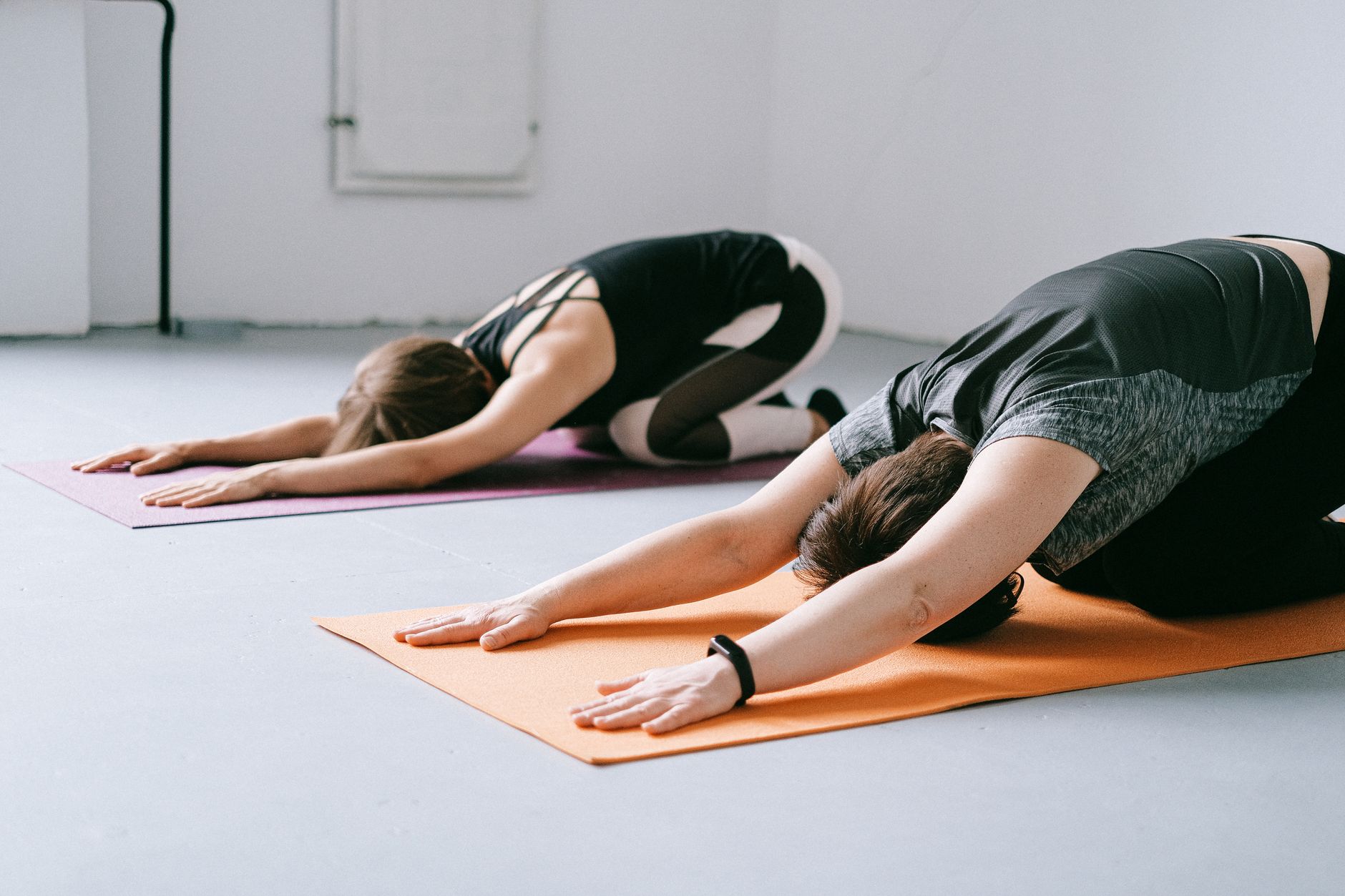
Choose one phrase. Just one. Not a chapter, not a study. A phrase you can say in a single exhale. Examples from the psalms and the gospel:
- "He restores my soul."
- "You are with me."
- "Be still, and know."
- "Your steadfast love endures."
- "Abide in me."
The rhythm is simple: breathe in slowly, then say the phrase on the exhale, either aloud in a whisper or silently. Repeat it for two to three minutes. Ten to twenty breaths.
The point is not to extract a new insight. It is to let the same words circle through you until they stop being familiar and start being true. This is something like steeping tea. You are not squeezing a teabag hoping for a quicker result. You are letting time do the work of drawing something out.
Prayer tool note: this is the ancient practice of breath prayer, a short sacred phrase carried on the breath. Some traditions use the Jesus Prayer, "Lord Jesus Christ, have mercy on me." It has been prayed this way for centuries, which should tell you something: believers with far less comfort and far more distraction than you have needed exactly this kind of simple anchor.
If your mind wanders during Movement Two, and it will, do not restart. Simply return to the phrase on your next exhale. Returning is the practice. The wandering is not a problem to solve; the return is the reps.
Movement Three: Speak (Two to Three Minutes)
You have been listening and receiving. Now you speak honestly.
Movement Three is where you tell God what is actually true about your day. Not the polished version. The real one. You might name a fear, a resentment, a decision you are avoiding, a grief you have been carrying quietly, a hope you are almost afraid to say out loud.
Keep it conversational and specific. For example: "Lord, I am angry at my brother and I do not want to be. I am handing that to You. Show me what to do with it." Or: "I have been performing for approval all week and I am tired. Thank You that Your love is not earned. Help me rest in that today."
This movement makes the practice personal rather than mechanical. It is also, in my experience, the movement people skip most often because it feels the most exposed. If you are in a group program or working with a coach, this is often the material we look at most closely, because what you bring to Movement Three tends to reveal what God is actually doing in your life right now.
You do not need to resolve anything here. Name it, hand it over, and let it sit in His presence. Resolution is not your assignment. Trust is.
Movement Four: Step (One to Two Minutes)
The final movement sends you out. This is what keeps a breath prayer practice from becoming a spiritual hideout.
Ask one plain question: "What is the one thing You are inviting me into today?" Then name it in a single sentence. "I will speak gently to my son at dinner." "I will send the honest email instead of avoiding it." "I will stop at 5pm and rest instead of pushing through."
Then close simply. A short thank you. A line of surrender. "I am Yours. Go with me."
And then get up and live your day. The proof of the practice is not a feeling in the moment. It is the slow, steady way your reactions change over months.
The most important takeaway: you are not trying to achieve a spiritual experience. You are practicing being present with God, which is a skill the Spirit grows in you over time, one faithful return at a time.

The Still Waters Framework at a Glance
| Movement | What you do | Time | Purpose |
|---|---|---|---|
| 1. Still | Slow breathing, 4 in and 6 out, no words | 1 to 2 min | Declare God is God; let your body settle |
| 2. Steep | One short Scripture phrase on the exhale, repeated | 2 to 3 min | Let truth move from head to heart |
| 3. Speak | Honest, specific conversation with God | 2 to 3 min | Bring the real thing into His presence |
| 4. Step | Name one invitation, close with surrender | 1 to 2 min | Carry the practice into your day |
How to Actually Stay Consistent With This Breath Prayer Practice
Consistency is where most gentle practices die, and it is usually not a motivation problem. It is a design problem.
Anchor it to something you already do
Attach the practice to an existing moment rather than finding a new slot in your schedule. Right after you pour your first coffee. Before you open your laptop. Right after you park at work. After you put the kids down. The anchor carries the habit when your enthusiasm dips, which it will.
Set a floor, not a standard
Decide now what your minimum faithful version is. Mine, for busy seasons, is one minute: three breaths and one phrase. That is it. Having a floor means a hard day does not break your streak. It just means a smaller day.
Use a single clear place
One chair, one corner, one spot on the porch. Your brain builds associations fast, and within a couple weeks that place will start doing some of the settling for you before you even close your eyes.
Keep one scripture phrase for a whole week
You do not need variety. You need depth. Staying with one phrase for a week means by Friday it will be available to you in traffic, in a hard meeting, in the middle of the night. That availability is the fruit.
Return after missed days without penance
You will miss days. When you do, come back the next morning without a makeup session and without self punishment. The practice is not a debt you owe. The discipline here is gentleness toward yourself, which is harder than harshness and much more like the Father.
What Changes, and What to Expect Over Time
I want to be honest with you in both directions, because I see the damage that false promises do to sincere believers.
What you can reasonably expect over weeks and months:
- Your body learns to associate stillness with safety, so it settles faster each time.
- Scripture phrases start surfacing on their own during ordinary moments.
- Your reactions slow down slightly. You catch yourself a half second earlier.
- Your honesty with God increases, because you have practiced saying true things in a safe place.
- You notice God's presence more, though mostly in hindsight at first.
What this practice will not do: it will not make you immune to anxiety, it will not replace professional care for trauma or medical conditions, and it will not give you a mountaintop feeling every morning. Some mornings you will sit down, breathe, pray, and feel almost nothing. Those mornings still count. You were with Him. Feelings are a gift when they come and a bad scorekeeper when they do not.
If you are carrying significant grief, trauma, or a mental health condition, please talk with a licensed professional rather than treating this practice as treatment. Breathwork can be a companion to that care, not a replacement for it.
Where This Framework Fits in a Fuller Life of Prayer
The Still Waters Framework is not meant to be your whole spiritual life. It is a daily anchor, and other things belong around it.
Scripture reading belongs alongside it. So does community, corporate worship, confession, service, and rest. Breath prayer is a doorway, not a room you live in. If ten minutes in this framework is all you have some seasons, receive it as enough, and let the other practices take their place as your capacity allows.
When someone asks me how to start a breathwork practice that actually lasts, my answer is almost always this: start smaller than feels impressive, keep the four movements in order, and do not measure the results weekly. Measure them at the end of a season. Look back over three months and ask whether you are more present, more honest, and more gentle. That is what transformation looks like from the inside. It is quiet, and then one day it is obvious.
Starting Today
Here is your assignment, and it takes ten minutes.
- Pick one short Scripture phrase. Write it down somewhere you will see it.
- Choose your anchor moment, the existing habit this will attach to.
- Set a floor: what does your smallest faithful version look like, on your worst day?
- Choose your one place.
- Do the four movements in order. Still. Steep. Speak. Step.
- Tomorrow, do it again, and stay with the same phrase all week.
You do not have to become a person who prays well before you start. You start, gently and often, and the Spirit does the forming. He leads. He restores. You walk with Him. He stays.
If you would like to walk this out with someone alongside you, that is what I do. I offer one on one coaching, groups, workshops, and a short intro call if you want to talk through where you are and what would help. Or if you would rather begin on your own today, take the framework above and give it ten quiet minutes. He is already there, waiting to be noticed.

